

A few of our stories and columns are now in front of the paywall. We at The Chief remain committed to independent reporting on labor and civil service. It's been our mission since 1897. You can have a hand in ensuring that our reporting remains relevant in the decades to come. Consider supporting The Chief, which you can do for as little as $3.20 a month.
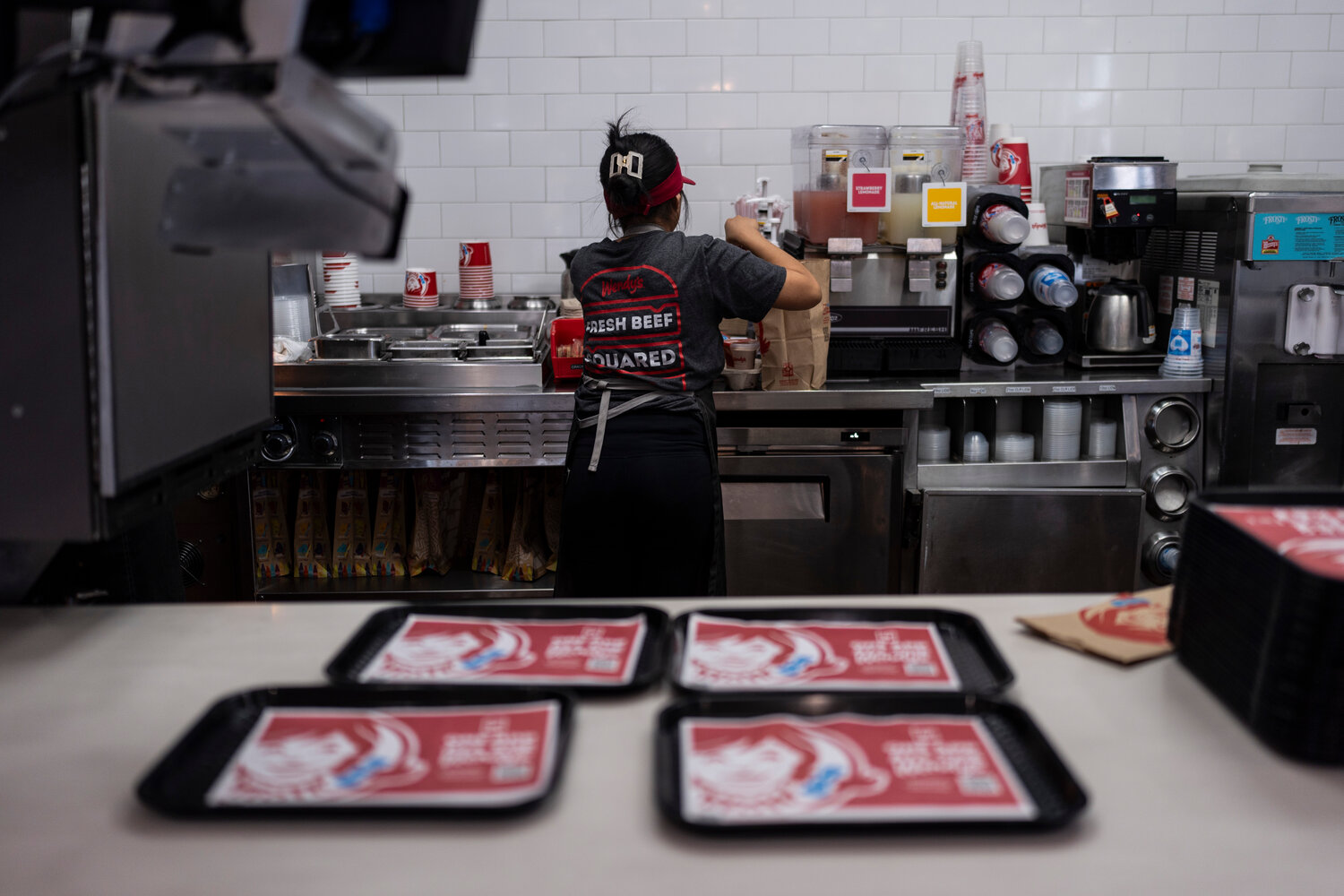
Michelle Cox was in disbelief when a U.S. Department of Labor official told her earlier this year she was violating federal law by employing 14- and 15-year-olds past 7 p.m. on school nights.
Cox, the owner of a Subway franchise in Maquoketa, Iowa, knew the state legislature had made substantial changes to state labor laws in 2023 to allow younger teens to work later on weekdays.
The problem, as critics of last year’s proposed bill pointed out during the legislative debate: Iowa’s new regulations directly conflicted with federal standards. And employers must follow the strictest standards, whether they be state or federal.
Cox said she fixed the problem the day the feds informed her, eliminating later work shifts for her youngest employees. But she said she still faced a $73,000 federal fine.
“I kept telling him I wasn’t trying to break the law,” she said. “I honestly thought I was following the law.”
She’s among several Iowa restaurateurs facing steep penalties from federal regulators following last year’s state legislation.
In recent years, lawmakers in Iowa and other states have sought to roll back long-standing child labor protections as employers struggle to fill open jobs and critics complain that many safeguards on child workers are outdated. But experts say no state has recently gone as far as Iowa, setting up a trial case of the extent to which the feds will crack down in states with looser laws.
Since 2021, lawmakers in 31 states have introduced bills that would weaken child labor protections, according to the Economic Policy Institute, a think tank that examines how policies affect low- and middle-income workers. This year, EPI tracked bills weakening child labor protections that passed in eight red states: Alabama, Florida, Indiana, Iowa, Kentucky, Louisiana, Oklahoma and West Virginia.
Among the changes are expanding eligibility for younger teens to drive to work or loosening standards on work permits for the youngest workers — items unaddressed in federal law. Other changes, including some enacted in Iowa, directly conflict with federal laws.
Jennifer Sherer, an EPI researcher who tracks the issue, said federal and state governments had for decades embraced protecting the youngest workers after eradicating the worst child labor abuses. But legislatures, backed by business groups, have recently sought to loosen standards, leading to heightened tensions over federal rules, she said.
“What we’re seeing is this pretty bold and alarming all-out assault on that consensus,” Sherer said.
Iowa’s Republican leaders, including Gov. Kim Reynolds, are protesting what she called “excessive fines” resulting from enforcement of federal law. In a July 1 letter to federal regulators, Reynolds said some businesses were facing fines as steep as $180,000.
In a statement, the federal Department of Labor acknowledged receiving the letter, saying officials would “respond accordingly.”
“We fully support the enforcement of labor laws against businesses which employ youth in dangerous and harmful work environments,” Reynolds wrote. “But a teenager working past 7 p.m. on a school night is not oppressive child labor.”
Reynolds noted that 25 other states have less restrictive laws than the feds. She said those states, including South Dakota, have not faced the same level of enforcement and fines as Iowa.
Since 1994, South Dakota has sanctioned more expansive hours for younger workers than federal law allows. But the federal labor department has not been nearly as active there, said Nathan Sanderson, executive director of the South Dakota Retailers Association.
“They want to make an example out of Iowa,” Sanderson said. “Other states that have had laws like this that have been in place for longer aren’t going to be nearly as prescient for the U.S. Department of Labor, because they’re viewing this as sort of a test case.”
In the meantime, employers such as Cox are stuck in the middle.
She thinks the federal government is unfairly targeting Iowa, which she says was only trying to support small businesses, and should have given out warnings first. She said she often works alongside her youngest employees, who are not endangered at Subway.
“They don’t run ovens. They don’t run meat slicers,” she said. “They make sandwiches.”
Cox is appealing her fine with assistance from the state’s restaurant association. She said the fine would prove ruinous for her store, which is located in an eastern Iowa town of about 6,100 people.
“I’d have to shut my doors,” she said. “Do you realize how many sub sandwiches you’d have to make to make $73,000?”
‘We should not be in this position’
Jake Andrejat, a spokesperson for the U.S. Department of Labor, said less restrictive state laws do not negate more restrictive federal rules.
“It is, and always has been, the obligation of the employer to maintain compliance with federal law when their states pass laws that are less restrictive,” he said in a statement to Stateline.
Many of the department’s investigations are based on complaints or tips. But it also performs “agency-initiated investigations,” aimed at protecting the most vulnerable employees who are the least likely to complain, Andrejat said.
“The restaurant industry has a high rate of violations and often employs vulnerable workers who may not be aware of their rights or specific employment rules such as the right to overtime and child labor laws,” he said in the statement.
To Iowa state Sen. Nate Boulton, the predicament facing employers was entirely preventable. And predictable.
“This is not a situation where the federal government dropped a trap door on the state of Iowa,” said Boulton, a Democrat who practices labor law in Des Moines. “This is a situation where there were all kinds of warnings and all kinds of efforts to draw attention to these conflicts. … We should not be in this position.”
Boulton was among those last year who warned Republicans that the law would conflict with federal standards. Since federal enforcement began, Iowa’s entire congressional delegation has called for changes in federal law, arguing the current protections are outdated.
But Boulton said there are less harmful ways to push for change in federal rules than to pass a conflicting state law.
“What a disappointing way to approach a political issue, by putting small businesses in a position to be fined to try to put pressure on the federal government,” Boulton said.
Other states take opposite approach
While youth employment rates have inched up in recent years, they remain significantly lower than previous decades. At the same time, the country has seen improved high school graduation rates, noted Betsy Wood, a historian of child labor.
She said that state policies should encourage that trajectory, not discourage it. Wood, who teaches history at Bard High School Early College in Newark, New Jersey, noted that recent rollbacks of child labor protections come during a time of skyrocketing child labor law violations.
“It is negligent and dystopian for employers — with the help of state legislatures — to balance their labor shortages on the backs of teen workers,” Wood said.
Unlike the states loosening work protections, lawmakers in seven states — Alabama, Colorado, Minnesota, Nebraska, Oregon, Utah and Virginia — recently enacted legislation to strengthen some child labor standards, according to EPI. The Illinois legislature passed a similar bill, but the governor has not signed it.
Several employers in Utah faced penalties after following less strict state standards. For example, the federal labor department announced in March it had fined a Baskin-Robbins franchisee in Utah nearly $50,000 for scheduling young workers too late in the evening and too many hours per week. The department said the owner of eight ice cream shops relied on “erroneous legal guidance” to follow the less stringent state regulations.
Stateline, founded in 1998, provides daily reporting and analysis on trends in state policy.


Comments
No comments on this item Please log in to comment by clicking here