


A few of our stories and columns are now in front of the paywall. We at The Chief remain committed to independent reporting on labor and civil service. It's been our mission since 1897. You can have a hand in ensuring that our reporting remains relevant in the decades to come. Consider supporting The Chief, which you can do for as little as $3.20 a month.

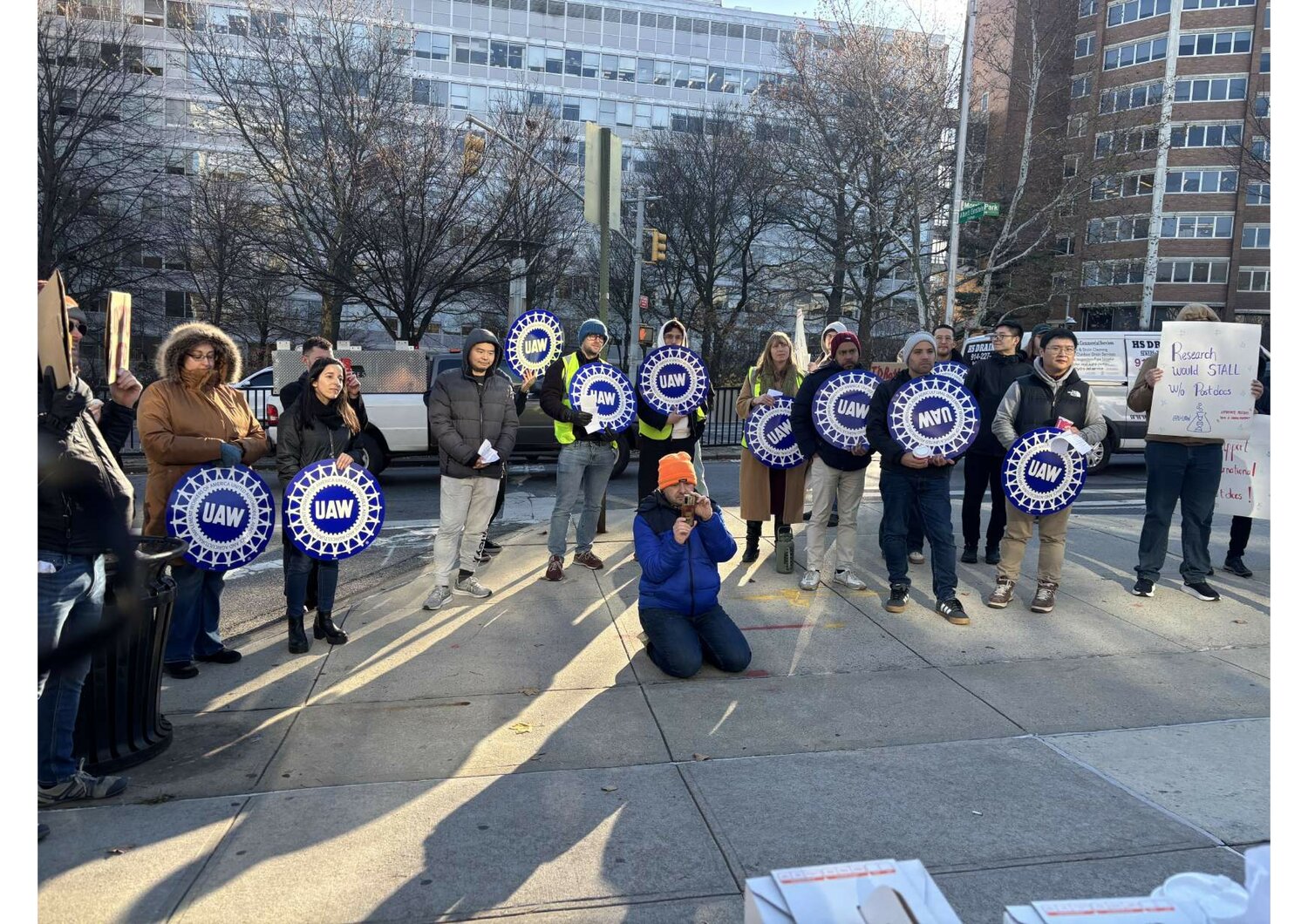


Postdoctoral researchers from the Einstein Researchers United union rallied in the Bronx on Wednesday calling for labor protections and fair wages from the Einstein College of Medicine administration. The gathering happened right before the the latest bargaining session with management and included union members and allies from other medical institutions in the city.
After 15 months of negotiations, only five of 28 articles in the contract have tentative agreements. The union has been at the negotiating table since winning their union election with over 82 percent voting yes in May 2024. Each of the 31 bargaining sessions have been biweekly and three to four hours long.
"What's been happening at the bargaining table is not just frustrating. It is unacceptable," says Silvia Hernandez, a former cardiology postdoctoral researcher on the union’s bargaining committee.
ERU claims that the university delayed contract negotiations and "regressed" on terms that they had previously agreed to. The ERU is unionized with the United Auto Workers, a union representing academic workers across the United States.
The five tentative agreements the union has reached to relate to job postings, severability, training, union security and union-management.
“We have not yet reached agreements on 15 other articles that would provide workplace rights and protections that are increasingly standard for unionized postdocs,” the union said in a statement following the most recent bargaining session, adding that they have not yet begun to discuss economic topics due to the significant delays in bargaining.
Some of the points that haven't been reached include appointments and reappointments, prohibition against discrimination, harassment, and retaliation, according to the statement.
"What has been especially frustrating over the course of this year is how Einstein uses the current political climate to obstruct our negotiations," said Juliane Grimm, a fourth-year postdoctoral researcher who's also on the bargaining committee.
The union demands that their contract matches other institutions in New York City, especially since postdocs at Weill Cornell ratified their first contract earlier this month. "Their contract not only improves working conditions, it also has one of the highest postdoc salaries in the country," said Grimm.
Outside of attending bargaining sessions, the union has also met with congressional leaders to advocate for research funding.
"We respect our postdoctoral fellows’ decision to unionize and to exercise their rights during negotiations," a spokesperson for the Albert Einstein College of Medicine said in a statement. "We continue to bargain in good faith with the union during the collective bargaining process."
Immigrant workers fear crackdown
Keyvan Ghadimi was a neurosurgery research fellow that came to the United States from Iran in 2022 and started working at Einstein in 2023. He was on a student visa before and has many international colleagues at Einstein who are worried about the future of their visas.
The Trump administration now requires employers to pay $100,000 to sponsor someone under an H1-B visa. Additionally, visa bans from certain countries make it more difficult to get J-1 visas.
In the contract, Ghadimi wants to see a commitment of support from the school by extending visas, increasing appointments by 2-3 years or sponsoring top talent for green cards and immigration.
"We really want Einstein to support these people because they have high skills and experience," said Ghadimi. He says that extreme immigration policies have discouraged top scientific talent from gathering in the US.
For McGuire, the federal government’s attacks have made it even harder for them to negotiate.
"We are bargaining against the backdrop of an extraordinary moment for scientific funding in America right now," said McGuire. "Massive budget cuts to the NIH and disastrously misinformative public health campaigns have demonstrated that this presidential administration does not value life-saving and economy-boosting science."


Comments
No comments on this item Please log in to comment by clicking here