


A few of our stories and columns are now in front of the paywall. We at The Chief remain committed to independent reporting on labor and civil service. It's been our mission since 1897. You can have a hand in ensuring that our reporting remains relevant in the decades to come. Consider supporting The Chief, which you can do for as little as $3.20 a month.
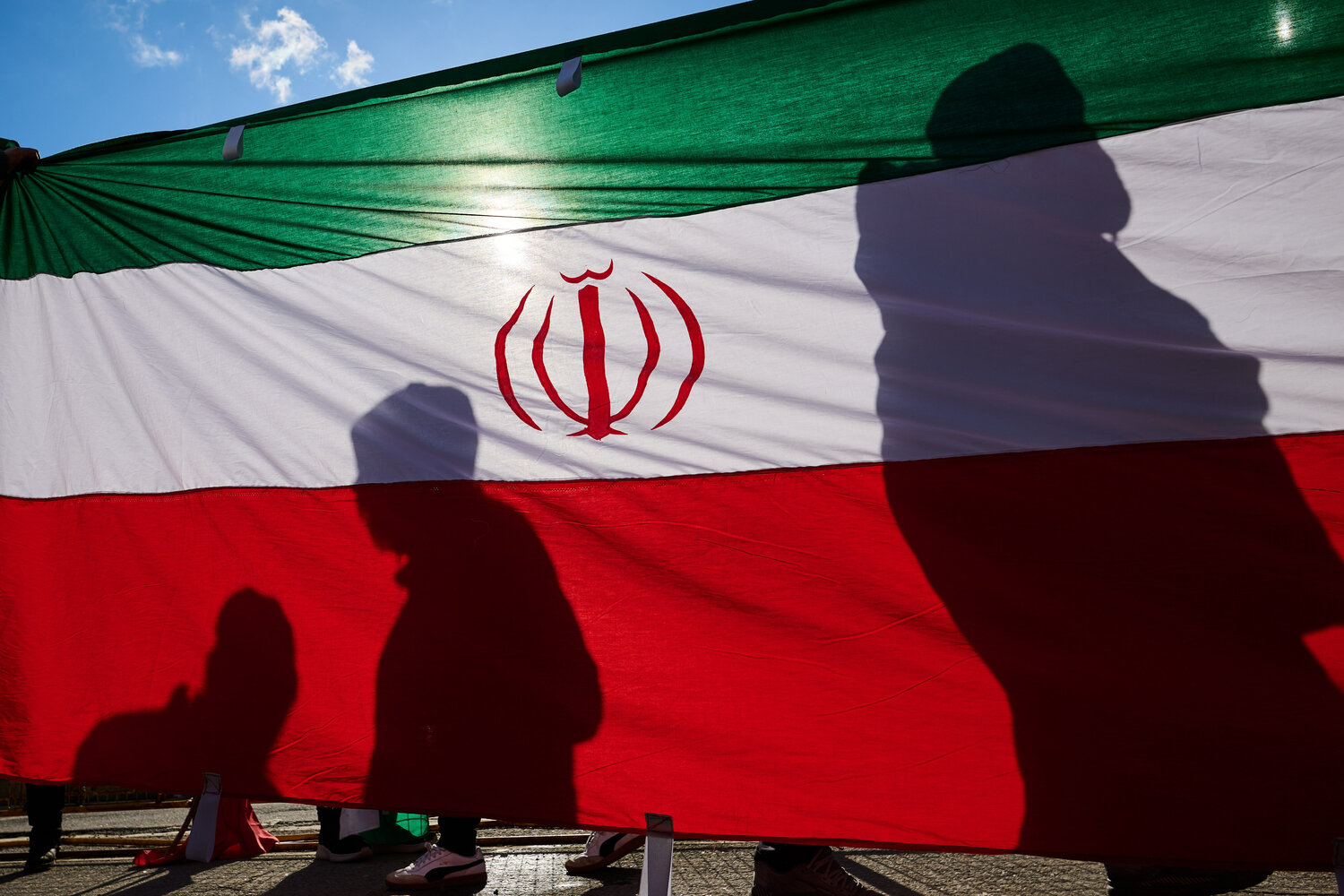
I recently ran into a former student, who reminded me of a school trip I organized to Washington D.C. in 2013 – and the most startling aspect of that trip, a visit to the State Department to hear about U.S.-Iranian relations. Now, what we learned that day has particular import.
This was during Obama’s presidency, and the U.S. was just beginning to negotiate what eventually became the agreement in which Iran committed to limiting all nuclear enrichment, while the US was to ease economic sanctions. So, our visit came at close to the highpoint of U.S.-Iranian relations in the past fifty years.
The low point – before today? As I taught students, we have to understand point of view.
To Iranians, the lowest point was probably when the US fomented the coup in 1953 that replaced its elected government with the Shah of Iran, leading to 25 years of tyrannical rule. Or perhaps it was when the United States armed Iraq’s Saddam Hussein after his 1980 invasion of Iran, a war in which Hussein deployed chemical weapons and a quarter million Iranians died. Or perhaps it was when the US military shot down an Iranian passenger plane over Iranian air space in 1988, killing 290 passengers.
Although those events are burned into Iranians’ memory, most Americans, if they think about Iran at all, recollect the Iranian’s seizure of the US embassy in Tehran in 1979. That was precipitated when the US granted the fleeing Shah asylum.
The Iranians unsuccessfully held fifty-two embassy staff hostage for more than a year, hoping to trade them for the Shah’s extradition, before finally releasing them shortly after he died. Which country, then, has suffered the more grievous injury from the other?
In any event, my class was called Washington Seminar. Groups of students picked subjects that interested them – climate change, abortion, the budget deficit, etc. – studied them, and then arranged meetings in Washington with experts on those issues.
We met with scientists, journalists, Congresspeople, even the head of the Environmental Protection Agency. And, then there was my Iran group, which hoped to hear from both the Iranian and American governments.
Because the U.S. does not recognize the Iranian government, it has no embassy in Washington. But the Iranians do have a United Nations mission here in New York and we arranged to visit them there.
For a bunch of high school students, who could not possibly be of any political or propaganda use to them, the Iranians were really extraordinarily generous with their time and hospitality. We were set down at a huge banquet table and fed traditional Iranian food.
Then, an aide to the ambassador explained to us about Iran. What I remember best is when he told us, “We have been a great civilization from the time of Cyrus the Great, more than 2500 years ago. Iranians are a great people too.” From there, it was on to Washington.
Now, I don’t know what the State Department officers were expecting, but my students had really prepared for this trip.
Obviously, teenagers cannot be “experts” on complicated policy issues. But they had learned enough to have intelligent conversations with experts, and ask real, hard questions. They had briefing books full of questions, in fact. And, of course, they had heard from the Iranians first, so those ideas were in their heads.
Those three State Department officers on the Iran “desk” – none of them spoke Farsi, the Iranian language, by the way – began to get impatient and frustrated. Didn’t these kids see that it was a question of good guys and bad guys?
Finally, one of them asked my students a question: “Well, what do you think the Iranians want?" Maybe he thought they’d say, “A nuclear weapon,” or “death to America.” But one student, who literally had not said a word all semester, now spoke up.
“Respect,” was all he said.
That answer seemed to enrage the officer. He began to yell. “We will never respect them,” he said. “When we talk to them, we do not treat them as equals.”
Remember, this was the Obama State Department speaking. You can imagine how much worse Washington’s attitudes are now.
There’s a phrase that educators – and union organizers! – use: “a teachable moment.” It’s when something happens – often unexpected or off-script – that turns the lightbulb on over people’s heads.
Oh, now I understand. I see something I never saw before. For those students, the lightbulb went on. The Iranians believed they had the right to national sovereignty. The American government thought – and thinks – otherwise.
What are the implications for today? Trump and his circle of yes-men have no respect for anyone who can’t wave a checkbook at them, and certainly not the Iranians.
They think that every country can be cowed and intimidated by the ruinous destruction the United States can unleash – and they’re often right. It’s pretty apparent they thought they could just cut off the head and the government would fall. Instead, the war has probably extended the lifespan of the regime, as nations tend to unite behind their governments when they are under attack.
“The images of renowned historic sites shattered by missiles has left many Iranians enraged,” reports the New York Times. “In interviews and in posts on social media, some are asking how a war waged by Israel and the United States supposedly against the Islamic Republic’s government and military has ended up damaging their cultural identity and sites… ;What happened to their claims that this was war on the regime and not on Iran and its people?’ asked Laleh, a 36-year-old from Tehran, reached by telephone. ‘They are lying.’”
History is not destiny, and I have no crystal ball, but in that war with Iraq, even after the Iranians pushed Saddam Hussein’s troops out of Iranian territory, and Hussein offered a truce, their government pursued the war for six more years, at tremendous human and economic cost to both sides. That was foolhardy, but not much different than the American government’s unwillingness to end its wars in Vietnam, Iraq, and Afghanistan.
The United States didn’t think the peoples of those countries should be treated as equals, or with respect, either.


8 comments on this item Please log in to comment by clicking here
fcannisi
Excellent and timely. I would add to the above history the duplicity carried out by the 1980 Reagan campaign.
Reagan's campaign manager, William Casey secretly met with the Iranians in Madrid and asked them to delay releasing the 52 hostages until after the U.S. election offering a "better deal" from Reagan than the Iranians could get from Carter.
John Connally, another Reagan operative, simulatiously traveled throughout the Middle East delivering the same message. As Reagan was inaugurated, the Iranians released the hostages and the Iran-Contra scandal was put in motion.
Just imagine what the Iranians must have thought about America - a country that calls itself the standard among Western democracies.
Wednesday, March 18 Report this
Valete
This article resembles a Rodney Dangerfield sketch when Mr. Dangerfield reveals that the problem in his marriage is that his wife doesn’t show him respect.
This story is based on a former student’s recollection of a school trip to Washington, D.C. in 2013. The student recounts how he was deeply moved by the stark differences in perspectives between the United States and Iran during the trip. The narrative then shifts to the student’s visit to the State Department, where he witnessed a heated discussion between students and officers. This encounter ostensibly highlighted the U.S. government’s disregard for Iran’s sovereignty. The article suggests that this incident underscores the persistent tensions and misunderstandings between the two nations, which could have significant implications for their current and future relations.
Summary:
This storyline ignores the complex and long-standing relationship between Iran and the United States, spanning over 75 years (1951-2026). It offers a facile human-interest narrative that fails to grasp the subject matter fully.
Thursday, March 19 Report this
fcannisi
What hubris! Only Word Man would deign to belittle a noted CUNY history professor (who also taught Social Studies at Bronx HS of Science) by comparing a thoughtful essay based upon a real-world experience to a Rodney Dangerfield comedy bit.
BTW, no one needs Word Man-splaining what other people wrote. Chief-leader subscribers know how to read.
Thursday, March 19 Report this
Valete
You have difficulty reading. For example, your post doesn’t address Mark Kagan’s topic of discussion—reen’roe!
Friday, March 20 Report this
Valete
One more for the road, Marc Kagan puts his pants on like any other human. He is not beyond disagreement. Certainly, mutual respect is a starting point in the world of today, but it is not the ultimate answer for treachery, fanaticism, and evil. As the Chinese proverb goes: “A journey of a thousand miles begins with a single step,” but it does not address the perils confronted along the peregrination—until its inimitable end.
Saturday, March 21 Report this
Valete
Reen’roe
You have an incurable veracity problem — little man.
For I did not belittle the CUNY college professor.
I disagree with his overly simplistic view on Iran.
The professor is not the divine Father-Confessor.
Disagreement with the professor on the topic of Iran,
is not belittlement, it is enlightenment—little man.
Saturday, March 21 Report this
asaly
An excellent article. I’m reminded that back in 79 during the hostage crisis I was working at CBS News. Even a highly informed person working at one of the country‘s best News outlets didn’t really grasp that the Iranians wanted the Shah returned. I didn’t don’t remember that that was the focus of US media. It seems eminently reasonable that the Shah should’ve been returned and the 20 billion which was their money anyway should’ve been given back. It was just a whole narrative about how terrible it was that they had taken hostages. I see now that the US media were distorting what the demands were and what the true context was.
Monday, March 23 Report this
Valete
The signals are all pointing in the same direction: Historian Victor Davis Hanson says Iran’s regime is on borrowed time.
Trump will win this conflict.
On March 20, 2026, Stanford University professor, military historian, and Hoover Institution senior fellow Victor Davis Hanson once again demonstrated his exceptional strategic acumen.
Hanson’s framework is historically grounded, and the battlefield itself serves as the backdrop for his unfolding narrative. Missile production is experiencing a decline, leadership is being replaced, and even Iran’s most advanced technological advancements have not significantly altered the strategic landscape.
As Victor Davis Hanson has demonstrated for decades, wars are won on the ground, and today’s realities indicate the imminent collapse of the world’s leading state sponsor of terrorism.
Monday, March 23 Report this